

Mobile · Google Pixel
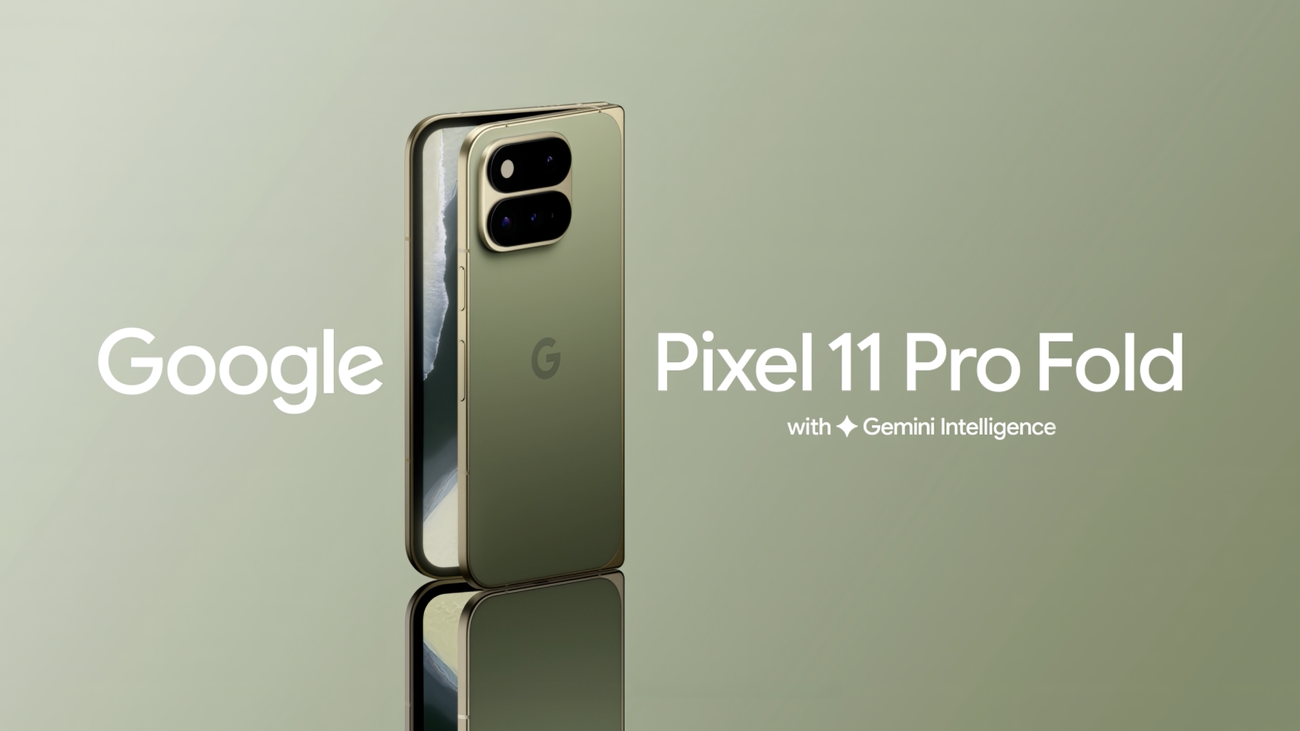
The most important Pixel 11 Pro Fold upgrade is not Gemini, the glowing camera bar or even the new Tensor chip. It is that Google finally seems to understand what makes foldable phones difficult to live with.
Lighter, thinner and considerably tougher, Google’s latest foldable focuses on fixing everyday friction rather than reinventing the category.
Foldable phones have spent years trying to prove that they can do more than regular smartphones. That argument has already been won.
The harder question is whether people want to carry a heavier, thicker and more fragile device every day just to access that larger screen.
The Pixel 11 Pro Fold is Google’s clearest answer yet. It does not dramatically change the folding-phone formula, but it attacks several of the reasons people still hesitate to buy one.
8.0-inch
Inner OLED display
239g
Almost 10% lighter
3,600 nits
Peak display brightness
$1,899
Starting price
A Better Foldable Starts With Less Foldable Baggage
Google says the Pixel 11 Pro Fold is almost 10% lighter and approximately one millimeter thinner than the Pixel 10 Pro Fold.
On a specification sheet, that sounds minor. In your hand, it matters far more than another synthetic performance increase.
The new Fold weighs approximately 239 grams and measures 10.1mm when closed. That is still larger than a traditional flagship, but it moves the phone closer to something people can comfortably use throughout the day.
Google also reduced the bezels and increased the outer display to 6.5 inches, while the internal screen remains an expansive eight inches.
That combination is important. A good foldable should work like a normal phone when closed—not feel like a small tablet that happens to have an emergency screen on the outside.
Pixel 10 Pro Fold
Heavier body, thicker profile, 3,000-nit displays and a camera system that felt behind Google’s regular Pro phones.
→
Pixel 11 Pro Fold
Lighter construction, slimmer body, brighter displays, improved crease and a new 48MP main camera.
Durability May Be the Real Headline
Foldable buyers have learned to treat durability claims carefully. A phone can survive laboratory testing and still become an expensive source of anxiety in normal use.
Google is making an unusually bold claim this year: the Pixel 11 Pro Fold is supposedly three times more durable than its predecessor.
That improvement comes from a new glass-fiber composite rear cover, ceramic cover glass and an updated gearless hinge designed to better protect the internal display.
The hinge also uses a larger bending radius and a thicker glass layer beneath the folding panel. According to Google, this reduces the visibility of the crease and places less stress on the screen.
The phone retains an IP68 rating for dust and water protection. That is especially significant for a foldable because the hinge introduces moving parts and potential entry points that traditional phones do not have.
Why IP68 Matters More on a Foldable
Water resistance has become normal on premium smartphones. Proper dust resistance is much harder to achieve when a device contains a hinge that opens and closes thousands of times.
Tiny particles can interfere with moving components or place pressure behind a flexible display. An IP68 rating therefore addresses one of the category’s most practical weaknesses—not simply another box on a specification sheet.
It does not make the inner screen indestructible. That softer folding panel will still require more care than the glass on a conventional phone.
The Displays Are Brighter, but the Crease Still Exists
Both screens now reach a claimed peak brightness of 3,600 nits, approximately 20% higher than the previous generation.
The 6.5-inch outer display and eight-inch internal panel both use adaptive 1–120Hz OLED technology. They can reduce their refresh rate when the image is static and increase it for scrolling, games and animation.
More brightness should improve outdoor visibility, but peak-brightness numbers need context. Phones reach their maximum output only under specific conditions and usually across a limited portion of the screen.
The crease is also improved—not eliminated. That distinction matters.
You may stop noticing a foldable crease during normal use, particularly when looking directly at the display. Reflections and off-angle viewing will still reveal that the screen physically bends.
Tensor G6 Is About Efficiency and AI, Not Benchmark Glory
The Pixel 11 Pro Fold uses Google’s new Tensor G6 processor with 16GB of RAM. Google says the chip improves browsing, application loading and power efficiency while substantially accelerating AI workloads.
That last part explains the Tensor strategy. Google is not trying to win every CPU or GPU benchmark. It is building hardware around its own camera processing, Gemini features and machine-learning models.
Whether that trade-off works depends on what you expect from a $1,899 phone.
Fast image processing, live translation and responsive multitasking fit the Fold perfectly. But buyers who want the strongest possible gaming performance may still find more aggressive silicon elsewhere.
A foldable also creates additional thermal challenges. Its internal space is divided by the hinge, while two large displays and a thin body leave less room for cooling.
Efficiency may therefore be more valuable here than a short burst of benchmark performance.
AI Makes More Sense on a Foldable
Many smartphone AI features feel disconnected from the hardware carrying them. The Pixel 11 Pro Fold offers several examples where the form factor genuinely changes what the software can do.
Its new sign-to-text feature can use one display to capture American Sign Language while showing translated text on the second screen.
The phone can also remain partially folded and support itself, making hands-free translation, video calls and photography easier without requiring a separate stand.
This is the kind of AI integration foldables need: functionality that uses their physical advantages instead of adding another chatbot shortcut.
HiLight Is Clever, but It Needs More Purpose
The camera visor now includes HiLight, a group of LEDs surrounding the flash that can display color-coded alerts.
It can glow for calls from selected contacts or indicate when Gemini is listening during a hands-free conversation. Google says additional messaging functionality will arrive later.
The idea has personality, and modern phones have lost some of the useful glanceable information once provided by notification LEDs.
There is one obvious limitation: HiLight becomes most visible when the phone is placed face down.
That feels slightly unnatural for an expensive foldable with a large outer display. Unless Google opens the system to more applications and notifications, HiLight risks becoming a memorable visual detail rather than an essential feature.
The Camera Finally Gets Serious—But Not Fully Pro
Google has equipped the Fold with a new 48-megapixel main camera that captures significantly more light than the previous sensor.
It is joined by a 10.5-megapixel ultrawide and a 10.8-megapixel telephoto camera with 5x optical zoom and up to 30x Super Res Zoom.
The upgrade should improve low-light photography, which was one of the Pixel 10 Pro Fold’s weaker areas.
Yet the “Pro” name still requires an asterisk. Google reserves its larger 48-megapixel telephoto, 120x Pro Zoom, Instant Night Sight and some advanced video tools for the regular Pixel 11 Pro and Pro XL.
That creates an awkward situation: Google’s most expensive phone still does not receive Google’s most complete camera system.
The engineering challenge is understandable. Larger sensors require more space, and foldables have very little of it. The buyer, however, still sees a $1,899 Pro phone making camera compromises that a substantially cheaper Pixel does not.
Battery Life Is the Compromise to Watch
Google promises more than 24 hours of battery life, with the more efficient Tensor G6 helping compensate for the demands of two bright displays.
The Fold supports 30W wired charging, reaching approximately 50% in 30 minutes. Wireless charging rises to 25W through built-in Qi2.2 and Google’s magnetic Pixelsnap accessories.
Native magnetic charging is genuinely useful. It improves alignment, makes accessories easier to attach and removes the need for special magnetic cases.
Still, this is a large, expensive device built for multitasking, photography and media consumption. “More than 24 hours” is a baseline expectation, not a major victory.
Real battery tests will matter more than Google’s estimate, particularly when the inner display, camera and AI tools are used heavily.
Pixel 11 Pro Fold vs. Samsung’s Fold Strategy
Samsung continues to push its premium Fold hardware toward a thinner and more refined design. Google’s latest Fold is improved, but it remains thicker and heavier than Samsung’s newest alternative.
Google’s advantage is different. Pixel software feels cleaner, its camera processing remains distinctive, and Google controls the Android features that increasingly define foldable multitasking.
Samsung offers a more mature foldable ecosystem and years of hardware experience. Google counters with a more direct Android experience and AI tools designed around the Pixel platform.
The best choice is no longer determined by who can build a folding screen. Both companies can. The real difference is which software philosophy you want to use every day.
Who Is This Phone Actually For?
The Pixel 11 Pro Fold makes sense for someone who regularly reads, edits documents, multitasks, watches video or manages communication from a phone.
The internal screen can replace a small tablet for many everyday tasks, while the improved outer display should prevent users from unfolding the device for every interaction.
It is less convincing for buyers who simply want the best Pixel camera, the longest battery life or maximum gaming performance. Google’s traditional Pixel 11 Pro models provide stronger value in those areas.
- Buy it for the large screen and genuine two-app multitasking
- Consider it if Pixel software matters more than benchmark leadership
- Wait for durability testing if long-term reliability is your main concern
- Choose the regular Pro if camera hardware is the priority
- Do not pay the premium if you rarely multitask on your phone
Real Talk
The Pixel 11 Pro Fold looks like a better product precisely because Google did not chase a dramatic redesign.
Less weight, a thinner body, a stronger hinge, improved dust protection and a better main camera solve real problems. These upgrades will matter every day after the launch-event excitement disappears.
But $1,899 changes the standard. At that price, buyers should not have to accept a clearly weaker camera system than the regular Pixel 11 Pro.
HiLight is attractive, Gemini is becoming more capable and the sign-to-text implementation shows genuine thought. None of those features alone justifies the premium.
The Fold earns its price only if the larger screen changes how you use your phone. If it becomes an expensive display that you unfold mainly to watch YouTube, the value disappears quickly.
💡 IskraCore Take
Pixel 11 Pro Fold is not Google’s most exciting foldable because it does something completely new. It is exciting because it appears less compromised.
That is what the category needs now. Foldables have already demonstrated their technical ambition. The next stage is making them lighter, tougher and easier to trust.
Google has moved meaningfully in that direction. The improved hinge, IP68 protection, brighter screens and reduced weight matter more than another collection of AI demonstrations.
The camera hierarchy remains difficult to defend, and the higher price gives buyers every reason to be demanding. “Pro Fold” should eventually mean the best Pixel camera and the best Pixel multitasking experience in one device—not a choice between them.
The Pixel 11 Pro Fold is Google’s strongest foldable argument yet. But at $1,899, it does not merely need to be impressive when opened. It needs to feel worth carrying every hour it stays closed.
Sources: Google Pixel 11 Pro Fold announcement, official Pixel hardware specifications and WIRED launch coverage.