

Smart glasses have been “the future” for years.
Most of the time, that future looked either too bulky, too expensive, too unfinished, or simply too awkward to wear in public.
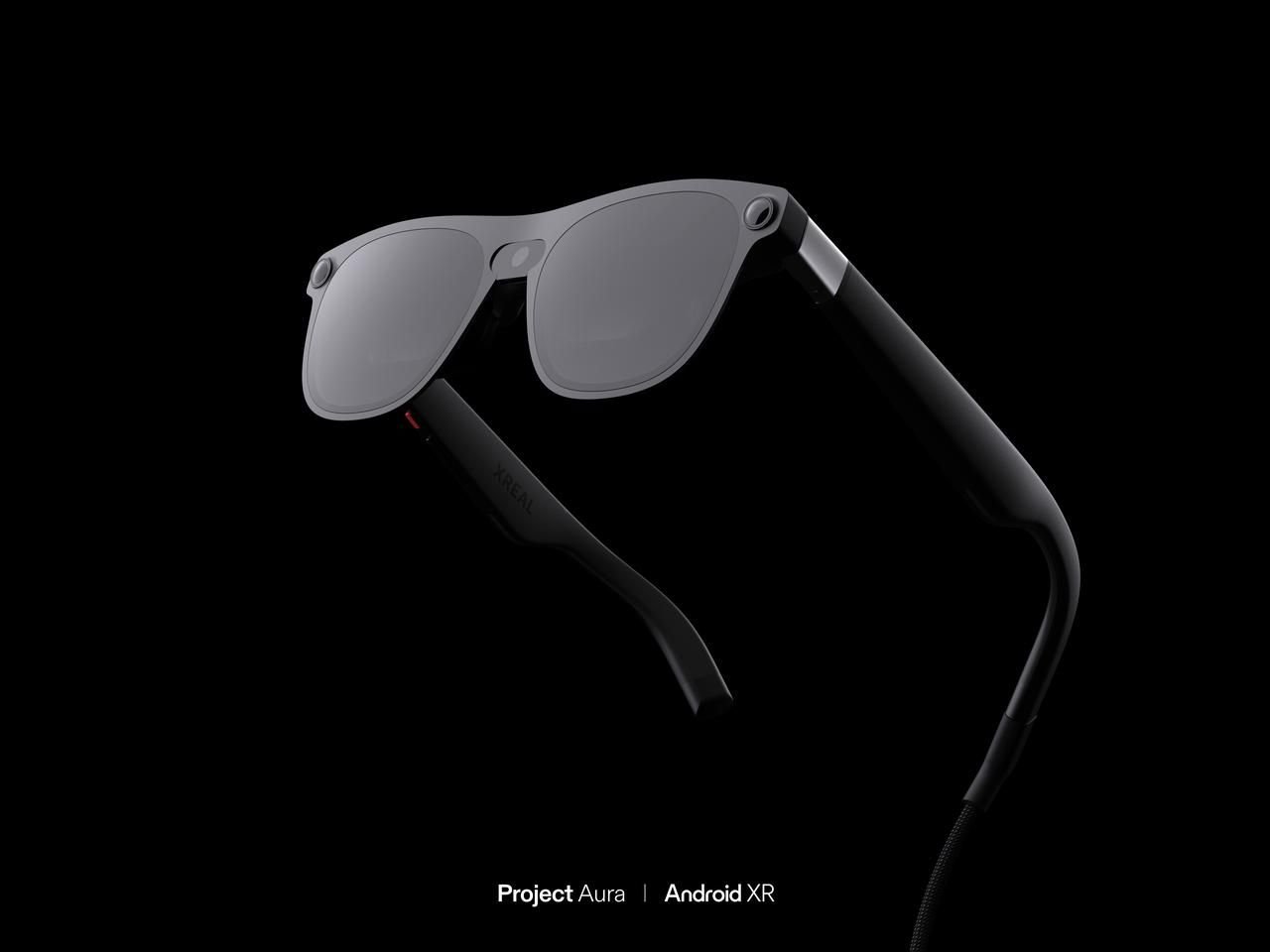
But at Google I/O 2026, XREAL and Google showed Project Aura — and this one actually feels like a more serious attempt at making XR glasses useful instead of just impressive in a demo.

Project Aura is a pair of upcoming wired XR glasses built with Android XR, Gemini AI, and Qualcomm hardware. XREAL says the glasses are coming globally in 2026, with developer kits arriving through the Android XR Developer Catalyst Program.
Project Aura Is Not Just Another Smart Glasses Demo
The important part here is not just the glasses.
The important part is the ecosystem behind them.
XREAL is handling the lightweight XR hardware. Google is bringing Android XR and Gemini. Qualcomm is powering the device with Snapdragon technology.
That combination matters because smart glasses cannot survive as a cool screen on your face. They need apps, developers, AI, content, and a reason to exist outside a trade show booth.
That is where Project Aura becomes interesting.
What XREAL Showed At Google I/O 2026
At Google I/O, attendees saw Project Aura running several Android XR experiences, including immersive Google Maps, large-screen video viewing, mini-screen multitasking, YouTube 180 and 360-degree VR content, WebXR painting, AI-powered games, and laptop connection through DisplayPort-in.
The glasses also feature a large OLED display and a claimed 70-degree field of view, which is important because many smart glasses fail when the virtual screen feels too small or too limited.
In simple words: this is not only about watching a floating YouTube video.
Google and XREAL are trying to build a new interface layer where AI, apps, maps, games, work screens, and spatial content all live around you.

The Good Part: This Could Actually Be Useful
The best version of Project Aura is easy to understand.
You put on lightweight glasses, connect them, and suddenly your laptop, videos, maps, AI assistant, and apps become spatial.
For work, that could mean extra virtual screens without carrying a monitor.
For travel, it could mean better maps, translation, and location-based information.
For gaming and media, it could mean a private cinema-like screen wherever you are.
And with Gemini built into the Android XR experience, Google clearly wants these glasses to feel less like a display accessory and more like an AI-powered computer you wear.
The Problem: We Have Heard This Story Before
Now comes the real talk.
The tech industry has promised smart glasses for years, and most attempts either disappeared, became niche developer toys, or turned into expensive products for a very small audience.
Project Aura looks promising, but it still has to answer the hard questions:
- How comfortable are they after two hours?
- How good is the battery situation?
- How expensive will they be?
- Will normal people actually wear them?
- Will developers build useful apps?
- Will Gemini feel helpful or just like another AI layer forced into the product?
That last point matters a lot.
AI alone will not make XR glasses successful. The product needs to solve real problems better than a phone, laptop, or normal monitor.
Why This Matters For Google
Google needs Android XR to work.
Apple has Vision Pro. Meta has Quest and Ray-Ban smart glasses. Samsung is part of the Android XR push. And now XREAL gives Google something closer to lightweight spatial glasses instead of another heavy headset.
That makes Project Aura important.
Not because it will instantly replace smartphones.
But because it could become the bridge between today’s phone-based AI assistants and tomorrow’s wearable AI computers.
Project Aura Feels Like A Step In The Right Direction
The smartest thing about Project Aura is that it does not seem to be pretending to be magic.
It is wired. It is developer-focused. It is connected to Android XR. It uses Gemini. It has a clear role as an early platform for spatial apps and AI-powered wearable computing.
That is a more realistic strategy than pretending everyone will suddenly walk around with full AR glasses tomorrow.
If XREAL and Google can keep the hardware light, the price reasonable, and the software useful, Project Aura could become one of the most important XR products of 2026.
Final Thought:
Project Aura is not the final form of smart glasses.
But it might be one of the first versions that makes the category feel practical again.
The hype around XR has failed before because the products were too early, too expensive, or too disconnected from daily life.
This time, with Android XR and Gemini behind it, Google and XREAL may finally have a real shot.
But only if Project Aura becomes more than a cool demo.
It has to become something people actually want to use every day.