
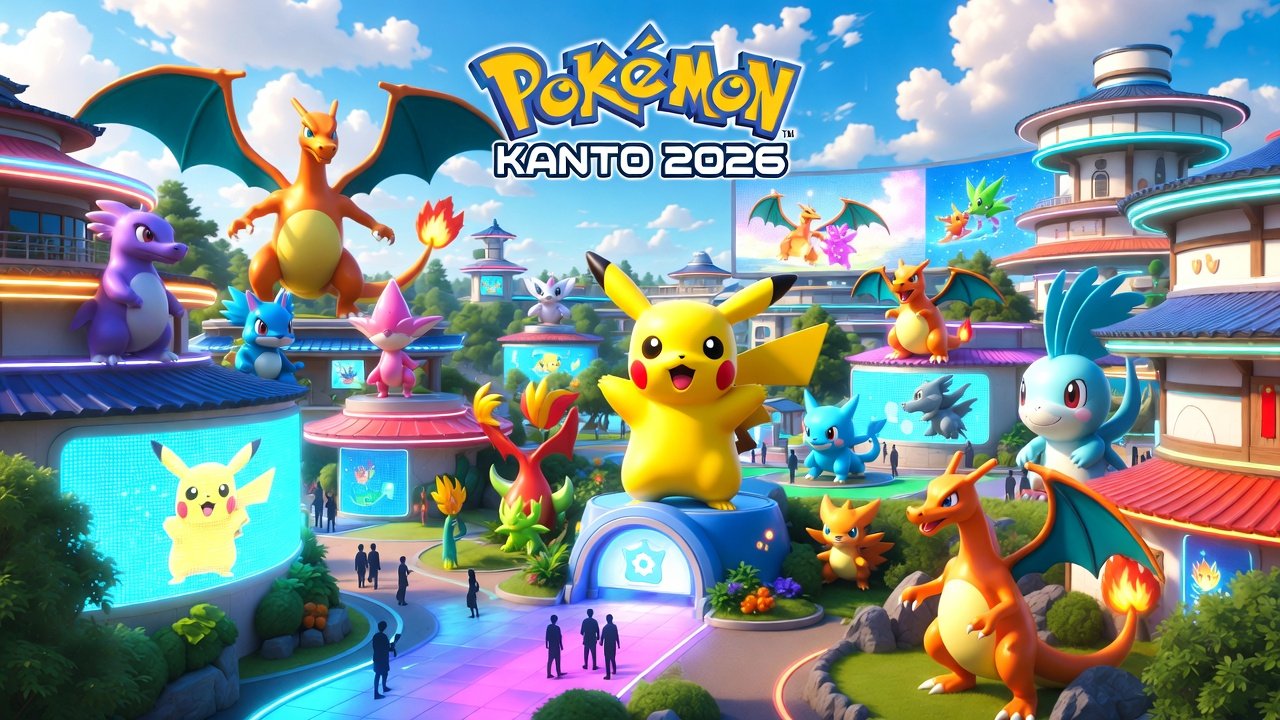

You don’t expect a Pokémon theme park to feel this real — until you step into PokéPark KANTO and suddenly nostalgia hits different. People aren’t just visiting; they’re staying longer than planned, wandering trails, and not wanting to leave.
Japan dropped PokéPark KANTO in February 2026 — the world’s first permanent outdoor Pokémon attraction — and it quietly raised the bar for what gaming-inspired experiences can be. This isn’t another merch dump or photo-op zone. It’s the blueprint most gamers have secretly wanted.
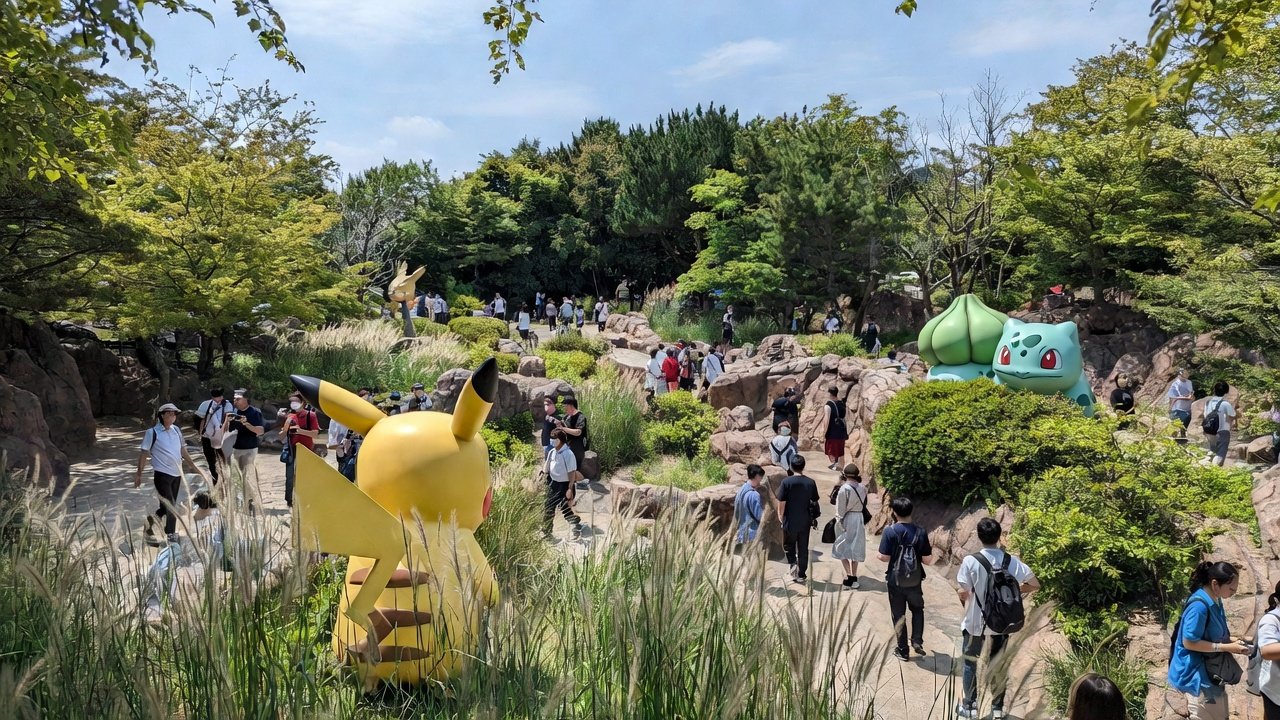
PokéPark KANTO’s Pokémon Forest turns real trails into an explorable Pokémon wilderness — over 600 life-sized figures in natural settings.
What PokéPark KANTO Actually Is
Opened February 5, 2026 inside Yomiuriland (Tokyo’s Tama Hills), this 26,000 m² permanent outdoor park splits into two zones: Pokémon Forest (wilderness trails, tall grass, rocky paths) and Sedge Town (Pokémon Center, Gym shows, Trainer’s Market, parades).
Over 600 life-sized Pokémon scattered throughout — not just statues, but positioned like they belong in the environment. You can touch them, take photos, ride themed attractions, watch shows, shop exclusive merch. It’s closer to stepping into a Pokémon game world than any theme park before it.
Why It Feels So Different (And Most Gaming Attractions Don’t)
Most “gaming experiences” are screens, queues, and branded merch. This flips the script hard:
- Heavy on environment, light on digital screens
- Exploration over linear rides
- Immersion over spectacle — Pokémon feel alive in nature, not posed for selfies
- Designed by Junichi Masuda himself, with real attention to how Pokémon would exist in the real world
That’s why visitors report the “I don’t want to leave” feeling. It’s not forced fun; it’s natural discovery.
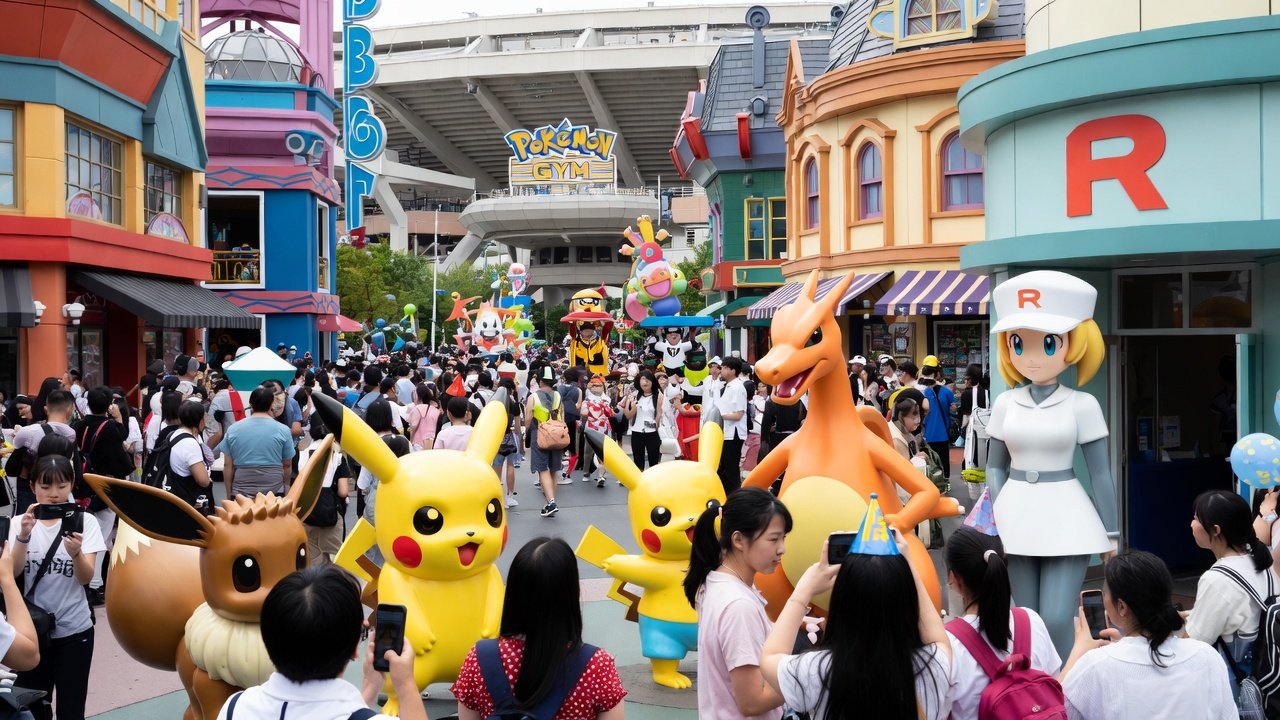
Sedge Town brings the classic Pokémon vibe — Center, Gym battles, parades — but in a living, walkable space.
Real Talk: This Isn’t the Future Everywhere — Yet
Let’s cut the hype. PokéPark KANTO works because:
- Strong IP (Pokémon’s 30th anniversary timing)
- Perfect location (nature + urban access)
- Big budget execution
But scaling this globally? Brutal. Expensive builds, IP licensing walls, location dependency. You won’t see PokéParks in every city soon. Most “immersive” experiences still flop — overpriced, underwhelming, too screen-heavy.
This one sets a dangerous standard though. Once fans taste real physical immersion blended with beloved worlds, going back to flat AR apps or basic conventions feels… limited.
The Bigger Shift This Signals for Gaming & Experiences
Gaming is escaping the screen. We’ve had AR/VR experiments, but PokéPark KANTO shows polished execution of blended physical-digital worlds.
The direction is clear:
- Physical spaces becoming playable
- Social, in-person experiences trumping solo screens
- Immersion > features
- Strong IP + thoughtful design = emotional stickiness
This is where tech, gaming, and entertainment converge. Less staring at pixels, more walking through worlds.
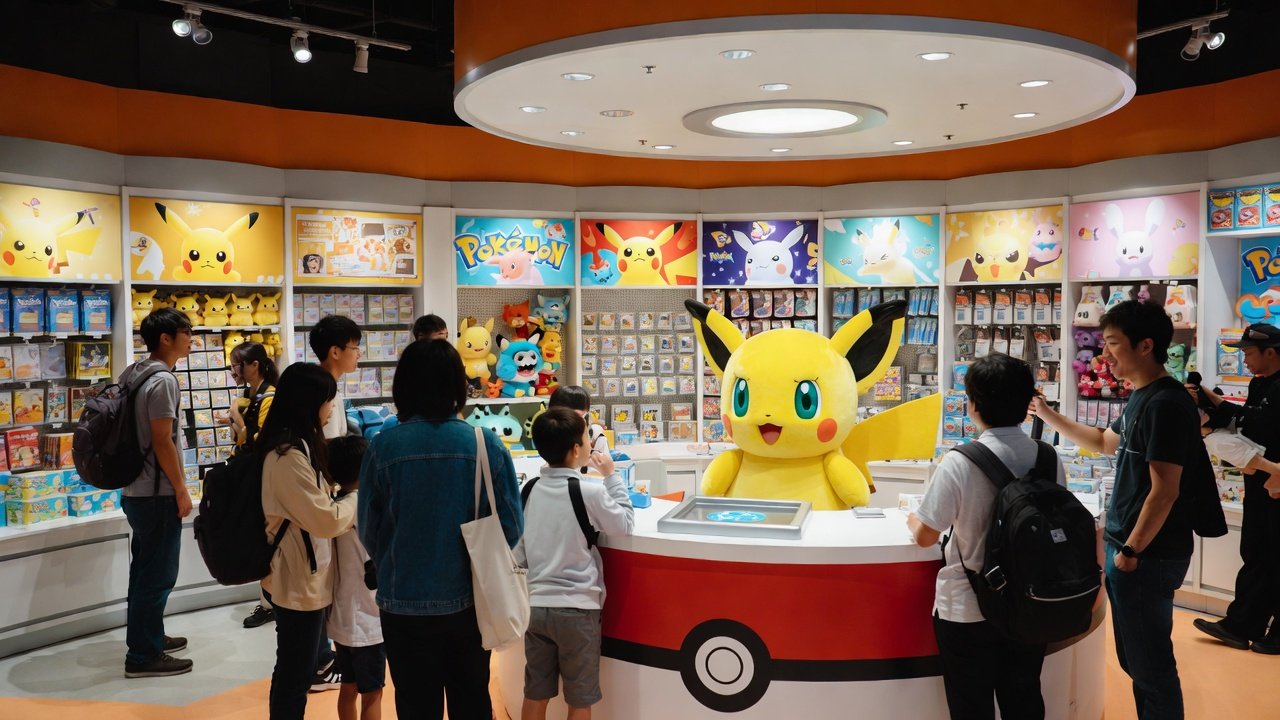
From healing at the Pokémon Center to watching Gym battles — full engagement in a real Pokémon world.
What Actually Matters — Lessons for Builders & Fans
Even if you never visit Japan, here’s what this proves:
- Experience > features: People remember how it felt, not the spec list
- Immersion is the new retention: Make them feel part of the world
- Execution beats ideas: Simple concepts done exceptionally win
- IP amplification: Strong brands make average execution feel legendary
- Physical + digital hybrid is coming: Start thinking beyond screens
This is the same logic that makes great games, apps, and platforms addictive. PokéPark KANTO just proved it works in meatspace too.
Don’t Sleep on This Signal
PokéPark KANTO isn’t just a cool park. It’s proof-of-concept. Gaming worlds don’t have to stay digital. When physical space feels like the game — and people lose track of time inside it — expectations reset forever.
Japan raised the bar again. Now the rest of the industry has to catch up. Or get left in the tall grass.