

Nothing CEO Carl Pei says the company’s first “AI-native” product will ship in December. The announcement is real, but almost everything buyers would need to know is still missing.
Pei describes the device as a productivity tool with no new screen, and says it could not have been an app. That points toward a new kind of hardware, but it does not yet tell us what the product actually does, how it works or why anyone should carry it.
What Happened
In a post on X, Pei said Nothing’s first AI-native product ships next month. He described it as a physical tool shaped by the design approach associated with Nothing’s phones and earbuds. He also said it has no new screen and could not have been delivered as an app.
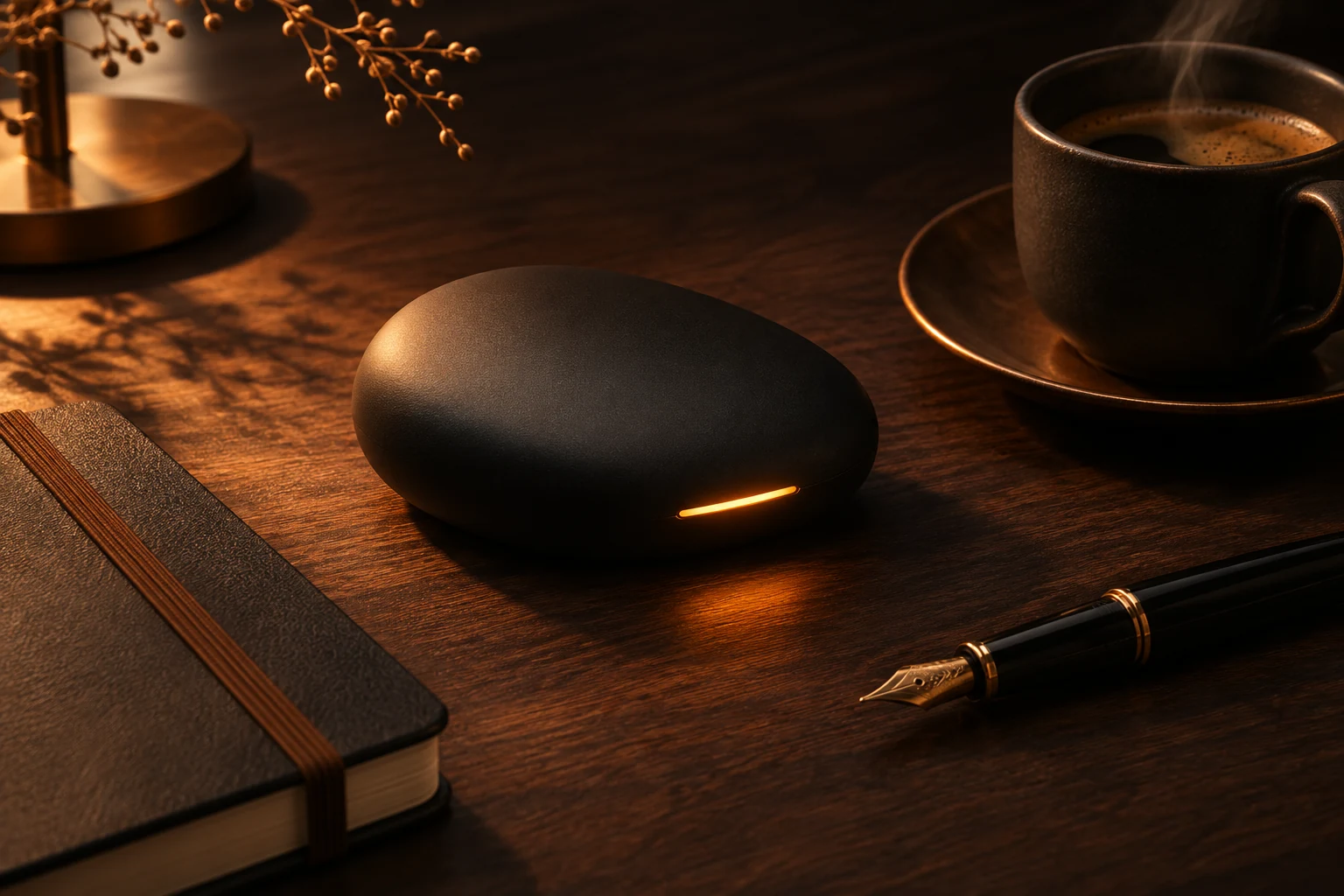
Nothing has not announced the product’s name, price, exact launch date, specifications or confirmed form factor. The teaser image shows only an ambiguous black rounded edge, leaving plenty of room for speculation and very little that can be independently assessed.
Pei also argued that the industry is too focused on finding an “iPhone moment” for AI through pins, pendants, glasses and digital companions. His view is that AI will first prove itself through productivity tools that help people do real work.
Why It Matters
Nothing is entering a category that has already attracted plenty of attention and skepticism. Screen-free AI hardware promises to capture context, answer questions and reduce the need to reach for a phone. In practice, the category still has to prove that a dedicated device is more useful than a smartphone app with voice input.
The strongest clue in Pei’s message is his focus on the “context gap”: useful ideas and conversations often disappear because people do not stop to write them down. That could suggest a recorder, note-taking tool or wearable assistant, but Nothing has not confirmed any of those possibilities.
The Bigger Picture
The timing is cautious. Humane’s AI Pin failed to establish a durable market, and other AI gadgets have faced criticism for limited usefulness, awkward interactions and unclear privacy boundaries. A device that listens, records or observes its surroundings would also need to answer difficult questions about consent, storage and control.
Nothing’s advantage is its design identity and growing audience, but design alone cannot rescue a product that solves a problem badly. The company will need to explain why this hardware deserves space in someone’s pocket, bag or workspace when existing phones already provide microphones, cameras, connectivity and access to powerful AI models.
Pei’s argument that AI will become useful through productivity is reasonable. It is also a much harder promise to prove than showing a polished teaser. A work tool has to be dependable, fast, private and genuinely easier than the workflow it replaces.
Final Thoughts
Nothing has created curiosity, but curiosity is not product-market fit. The December launch will show whether the company has built a useful new interface for AI or simply found a stylish way to repackage capabilities that already exist on a phone.
For now, the honest description is simple: Nothing is launching a screenless AI product, and almost every important detail remains unconfirmed.
Source: Carl Pei’s announcement on X and reporting from TechCrunch. Speculation about the device’s form and features is clearly marked and has not been treated as fact.