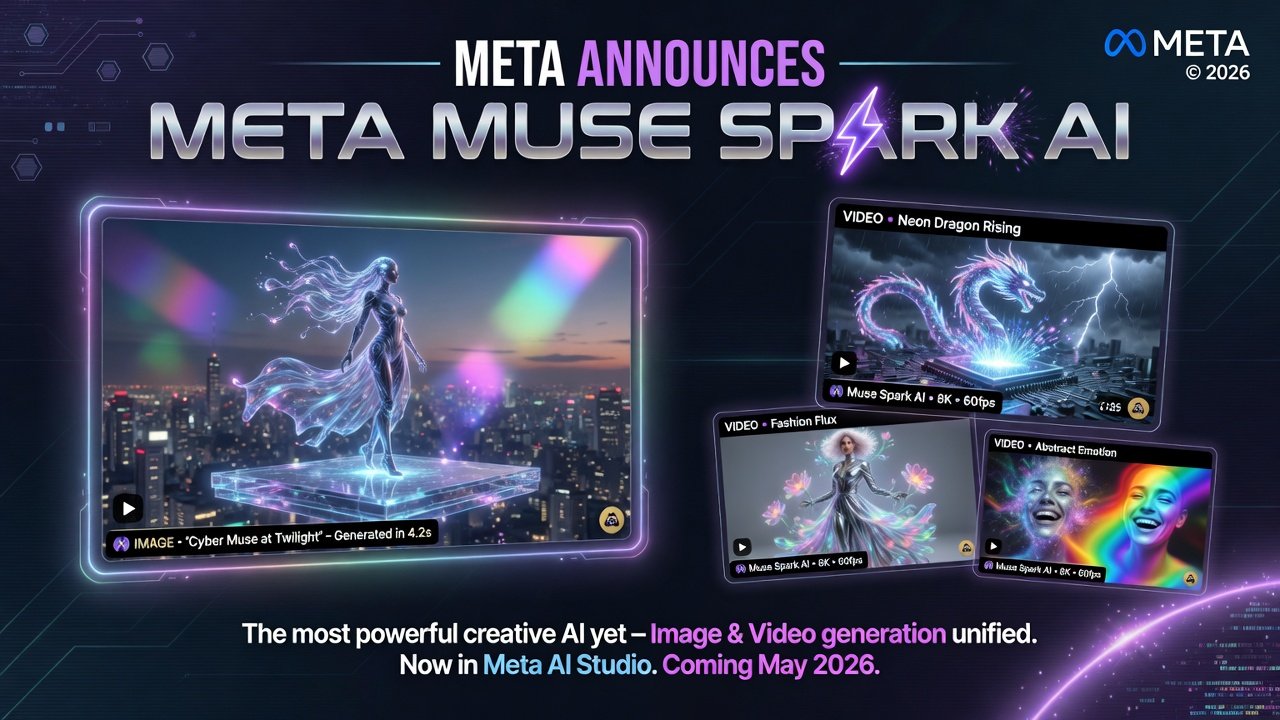

Meta just dropped Muse Spark — its first major new AI model in over a year — and it’s not another open-source Llama experiment. This one is proprietary, built to win in images and video, and aimed straight at making Meta’s ads smarter and more engaging. The big question everyone is asking: after burning tens of billions on AI, can this thing finally make real money?
Announced April 9, 2026, Muse Spark marks a sharp strategic pivot for Meta. After years of giving away powerful models for free, the company is now playing the same game as OpenAI, Google, and Anthropic — building something it can actually charge for.
Muse Spark excels at image and video generation — Meta’s new bet to make advertising more powerful and engaging.
What Muse Spark Actually Brings
This isn’t just another chatbot. Muse Spark is built with a clear consumer and creative edge. It shines in image and video processing — areas where Meta sees the biggest opportunity to improve content on Instagram, Facebook, and WhatsApp.
Compared to Claude and Gemini, it feels more consumer-focused: faster creative tools, better multimodal understanding, and capabilities designed to make everyday user-generated content and advertising more compelling. Benchmarks released by Meta show it competitive (and in some visual tasks, ahead) of current frontier models.
The Big Strategic Shift
Meta spent the last year in near-radio silence on new models while pouring money into talent. They hired Scale AI co-founder Alexandr Wang and a team of top researchers for over $14 billion, created Meta Superintelligence Labs, and committed $115–135 billion in capex this year alone.
Now they’re moving from the “give it away and hope developers love us” Llama strategy to a proprietary model they can monetize. First step: private API preview with select partners. Next: paid API access for third parties.
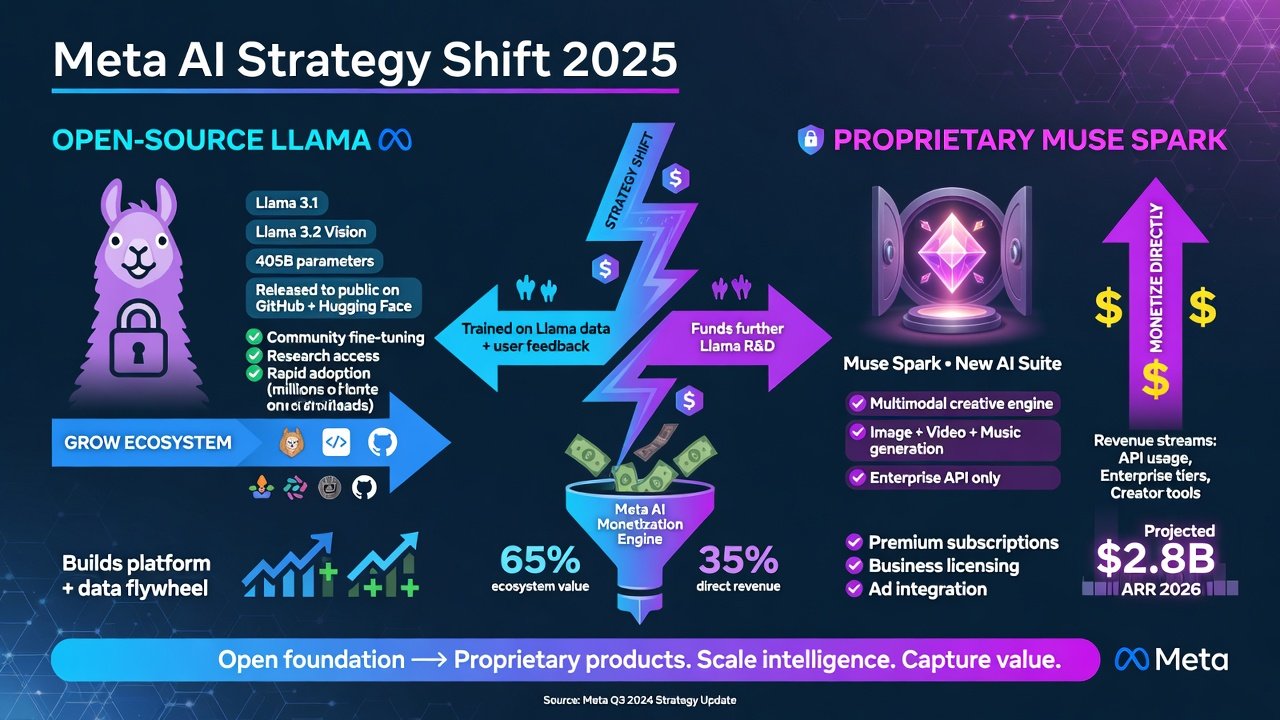
From open-source Llama to proprietary Muse Spark — Meta’s clear pivot toward revenue-generating AI.
Real Talk: The Money Question Is Still Open
Here’s the uncomfortable truth: Meta is very late to the proprietary AI party. OpenAI and Anthropic are valued at over $1 trillion combined. Google has Gemini baked into everything. Meta’s advertising business (98% of its $200 billion revenue) is still the golden goose, and the company is betting Muse Spark will make ads more effective and keep advertisers spending more.
That’s a smart play on paper — better AI means better targeting and more engaging creative. But developers are already asking the obvious question: why pay for Muse Spark when they can fine-tune open models or use cheaper alternatives? The pitch to developers just got harder.
Meta isn’t trying to win the “smartest model” crown. They’re trying to win the “makes our core business more money” crown. Whether that’s enough remains to be seen.
How Meta Plans to Make Money With Muse Spark
The roadmap is clear:
- Power Meta AI across Facebook, Instagram, WhatsApp, and Messenger with better image/video tools.
- Offer paid API access to businesses and developers who want to build on top of it.
- Use the model internally to supercharge advertising creative, targeting, and performance.
If advertisers see higher ROI, they’ll spend more. That’s Meta’s entire business model in one sentence.
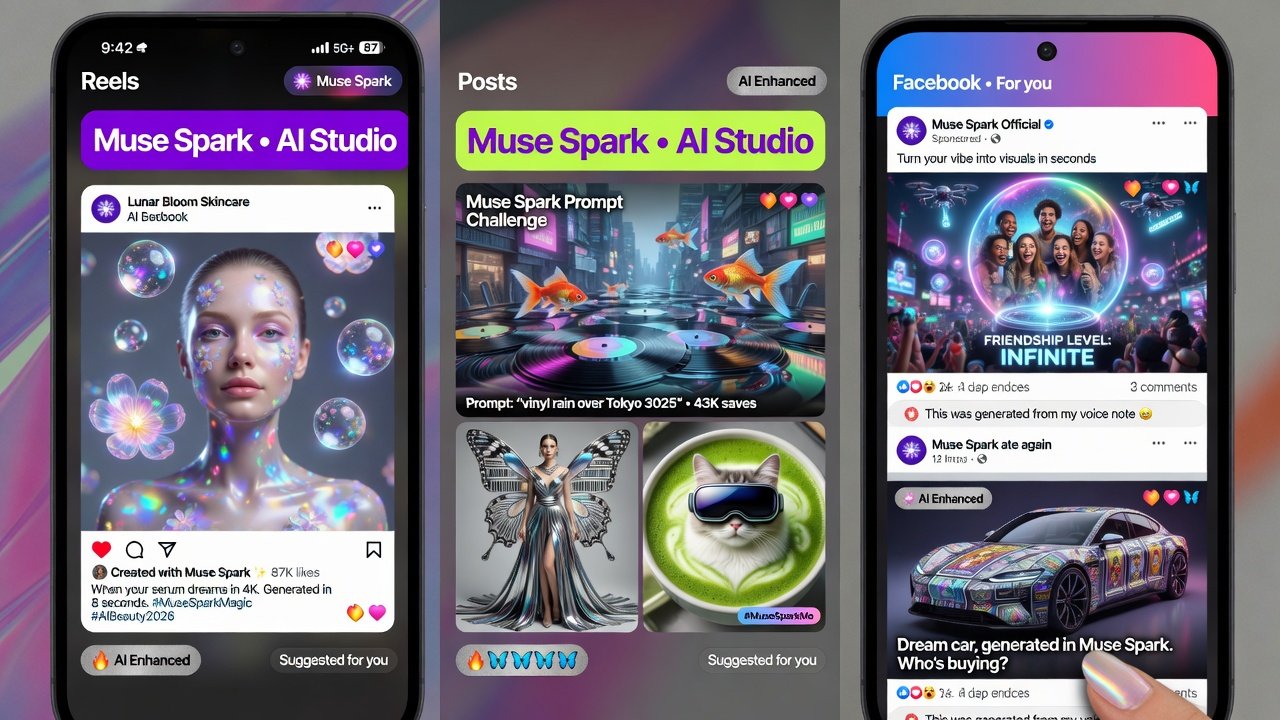
Muse Spark is designed to make Meta’s platforms more engaging — which directly feeds their massive advertising machine.
What This Means for the AI Race in 2026
Muse Spark shows Meta is no longer content being the generous open-source uncle. They want to be a serious player with a monetizable product. The model has a strong consumer/creative bent, which fits perfectly with Meta’s social empire.
But the pressure is real. They’re late, they’ve spent enormous money, and the bar set by OpenAI, Google, and Anthropic is sky-high. Success won’t be measured in benchmarks — it will be measured in whether advertisers are willing to pay more because of it.
The Bottom Line
Meta finally has a shiny new frontier model. It looks impressive on paper, especially for image and video work. But the real test isn’t technical performance — it’s whether it can move the needle on Meta’s bottom line.
In an AI world where everyone is burning cash, Muse Spark is Meta’s serious attempt to prove their massive investment can actually generate profit instead of just hype. The model is here. Now the hard part begins: making it pay.
April 2026 just got a lot more interesting for the entire AI industry.