LG just announced something that sounds completely insane on paper: the world’s first gaming monitor with a native 1000Hz refresh rate at Full HD resolution.
While most high-end gaming monitors are still fighting over 360Hz, 480Hz or 540Hz, LG has skipped several steps and gone straight to four-digit territory. The new UltraGear monitor is aimed squarely at competitive esports players who want every possible advantage in motion clarity.
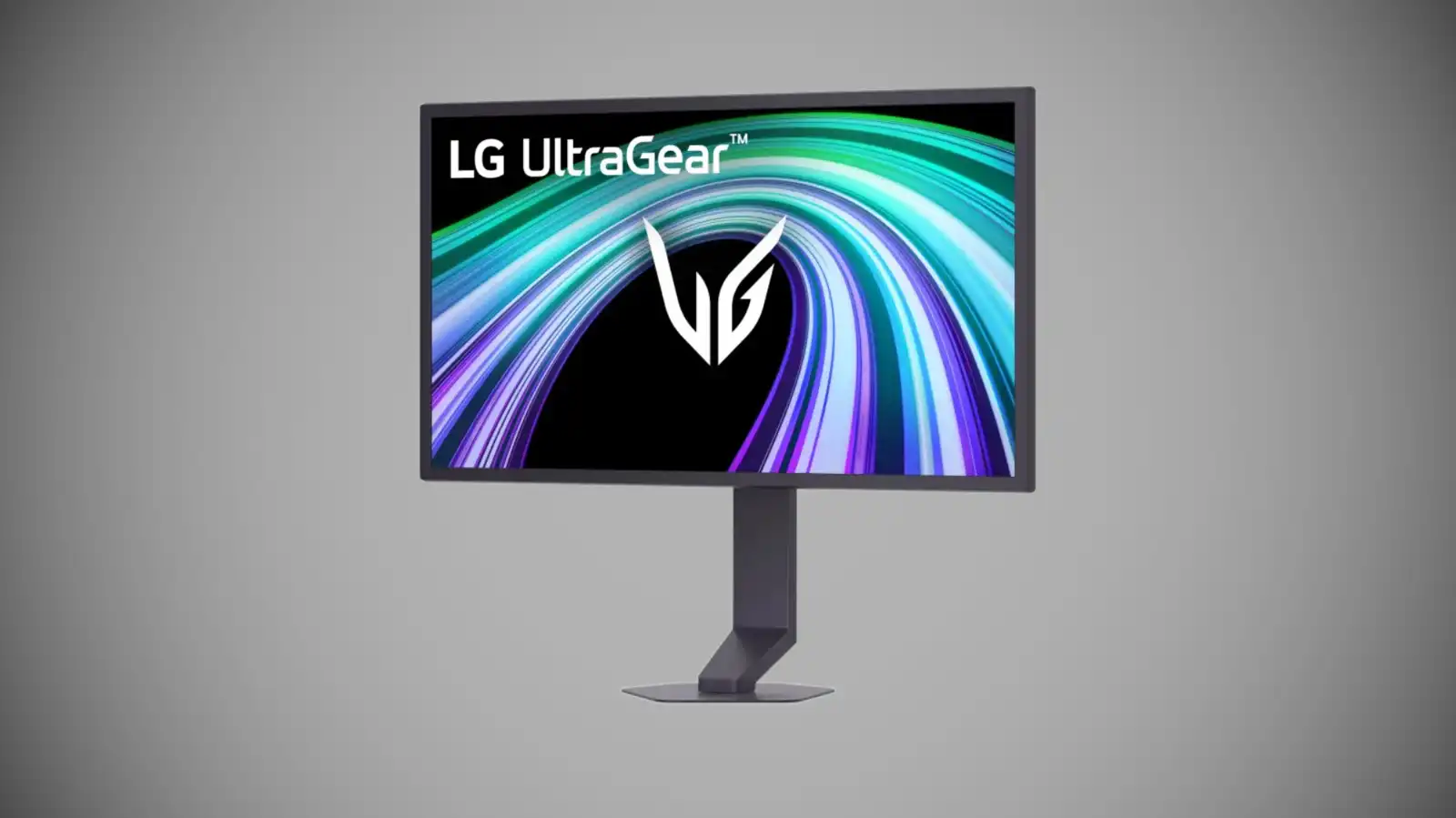
LG aims to convince esports players with an ultra-fast panel. (Image: LG Electronics)
What LG Actually Announced
The monitor uses a specially developed Fast IPS panel capable of running at a true native 1000Hz refresh rate at 1920×1080 resolution. According to LG, this isn’t achieved through aggressive overdrive or frame generation tricks — it’s a native panel specification.
This level of refresh rate dramatically reduces motion blur and makes fast-moving objects significantly clearer. In theory, it gives players a noticeable edge in fast-paced games like Counter-Strike 2, Valorant, or League of Legends, where every millisecond of visual clarity can matter.
Why 1000Hz Is a Big Deal (Technically)
Most gaming monitors today top out at 540Hz. Going from 540Hz to 1000Hz is a massive technical jump. The benefits include extremely low motion blur, better visibility during rapid camera movements, and potentially lower perceived input lag in competitive scenarios.
However, these gains are only really noticeable in very specific, high-skill esports scenarios. For the average gamer, the difference between 360Hz and 1000Hz is much smaller than the jump from 60Hz to 144Hz or 144Hz to 360Hz.
Real Talk: Who Actually Needs This?
Let’s be honest — this monitor is not for normal people.
1000Hz only makes sense if you’re a serious competitive player who already plays at very high frame rates (ideally 600+ FPS) and has the hardware to drive it. Even then, the visual difference between 540Hz and 1000Hz is relatively small compared to the price you’ll likely have to pay.
This is classic high-end esports hardware: extremely specialized, very expensive, and only truly useful for a tiny percentage of players. For everyone else, it’s mostly marketing flex and future-proofing.
What This Means for the Gaming Monitor Market
LG’s move shows that panel manufacturers are still pushing the limits of traditional LCD technology, even as OLED and upcoming micro-LED solutions gain traction. It also puts pressure on competitors like Samsung, ASUS, and Alienware to respond with their own high-refresh-rate offerings.
Expect to see more 540Hz and 720Hz monitors in the near future as manufacturers try to close the gap before 1000Hz becomes more common.
Should You Care?
Probably not — unless you’re already competing at a high level and have a PC that can consistently push extremely high frame rates.
For most gamers, a good 360Hz or 540Hz monitor will still deliver 95% of the competitive advantage at a much more reasonable price. The jump to 1000Hz is real on paper, but the practical benefit for the majority of players remains questionable.
Final Verdict
LG has officially entered the four-digit refresh rate era. It’s an impressive technical achievement and a clear signal that competitive gaming hardware is still evolving rapidly.
Whether 1000Hz becomes the new standard or remains a niche product for the top 1% of players is something we’ll see over the next two years. For now, it’s mostly a statement piece — proof that LG is serious about the high-end esports monitor segment.
Just don’t expect it to magically make you better at the game.