

Chrome is a great browser. That’s exactly the problem.
It’s fast, polished, familiar, and deeply embedded in how millions of people use the web. But convenience has a price, and with Chrome, that price is control. Not just over your browsing data, but over the direction of the modern web itself. :contentReference[oaicite:0]{index=0}
That’s what actually matters here. This is not another dramatic “delete this app now” panic piece. It’s a practical look at why more people are reconsidering Chrome, what the real trade-offs are, and which browser alternatives are actually worth your attention. :contentReference[oaicite:1]{index=1}
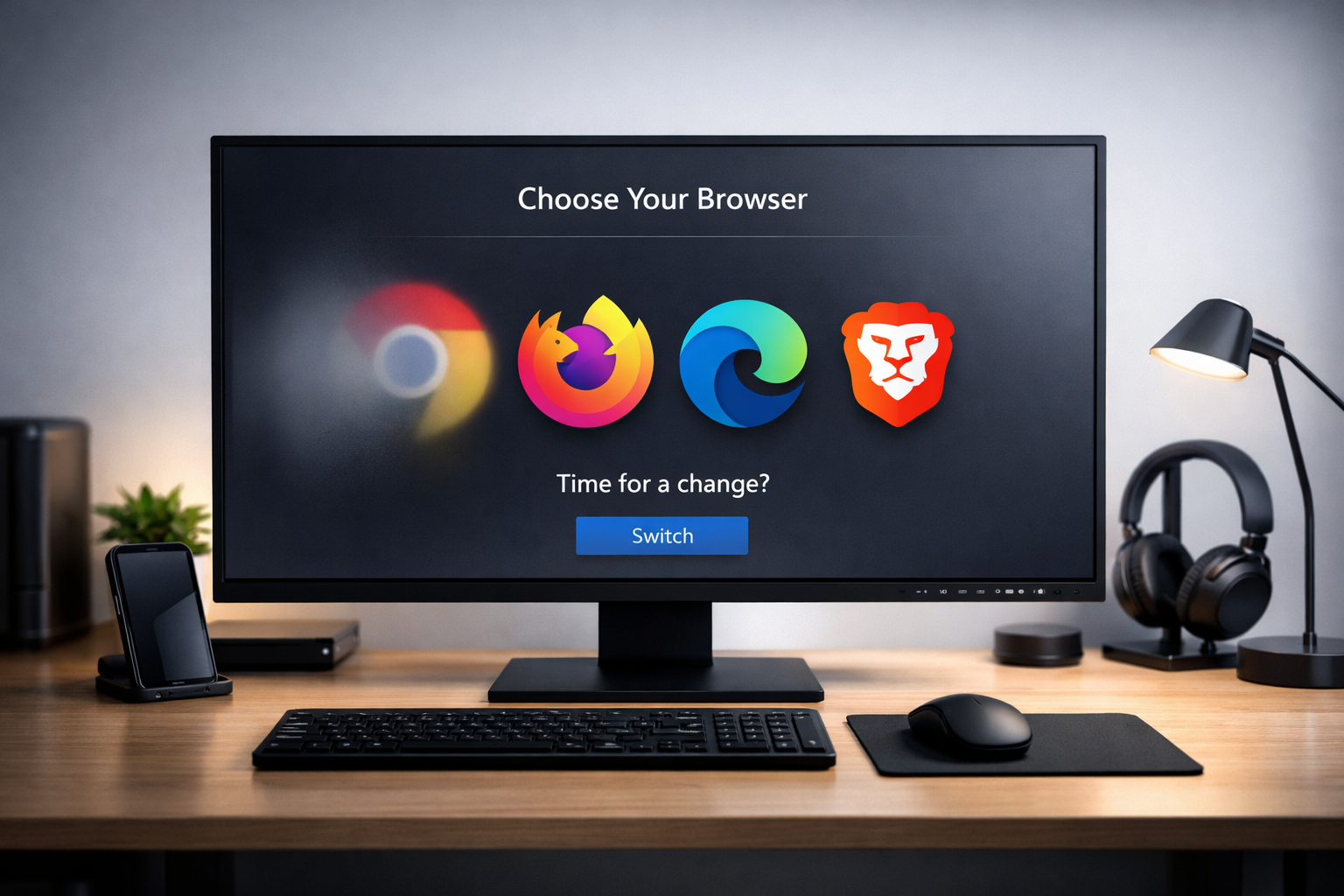
A growing number of users are rethinking Chrome’s role in their digital life
Why Chrome feels so good to use
Let’s be honest: Chrome didn’t become dominant by accident. It’s quick, stable, widely compatible, and usually the browser developers optimize for first.
For regular users, that means fewer broken websites, less friction, and almost no learning curve. This is where most people stop thinking. If it works, they keep it.
The real issue isn’t speed — it’s leverage
Chrome is part of a much bigger Google machine. If you use Chrome while signed in, enable sync, and live inside Google services like Search, YouTube, Maps, Gmail, and Android, you’re feeding one company an enormous amount of behavioral data and influence over your online habits. Google’s own account tools say activity can be saved across services, and Chrome history can sync across devices when that feature is enabled. :contentReference[oaicite:2]{index=2}
You can see a lot of this yourself through Google My Activity and manage parts of it through your account settings. That transparency is useful, but it doesn’t change the bigger reality: the default setup still benefits Google first. :contentReference[oaicite:3]{index=3}
Chrome is not just a browser anymore
Chrome is also a distribution channel, a data collection point, and a strategic advantage. The browser helps keep Google Search in the center of your daily workflow, and that matters when search, ads, and AI are all colliding into one giant platform war.
This is also why regulators keep paying attention. The U.S. Department of Justice has previously argued that Google should divest Chrome as part of antitrust remedies tied to search monopoly concerns. :contentReference[oaicite:4]{index=4}
Why Chromium dominance matters more than most people realize
Even if you uninstall Chrome, Google’s influence does not magically disappear.
A huge portion of the browser market runs on Chromium, the open-source project Google created and still heavily shapes. That includes browsers many people treat as “alternatives,” even though they still ride on Google’s technical foundation. Chromium itself describes the project as the base for Google Chrome, and its importance across the browser ecosystem is hard to overstate. :contentReference[oaicite:5]{index=5}
Here’s what actually matters: when one engine stack dominates, one company gets outsized influence over web standards, extension behavior, developer priorities, and what the future browser experience looks like.
The extension fight says a lot
The Manifest V3 transition is a good example. Google frames it as a security and platform modernization move. Critics see it as a change that made life harder for some powerful ad-blocking approaches. Both things can be true at the same time. :contentReference[oaicite:6]{index=6}
The part worth paying attention to is this: when Google makes a platform-level browser decision, the ripple effects often hit far beyond Chrome itself.

The browser you choose affects both privacy and how much control a single company has online
So what should you use instead?
That depends on what you actually want.
If you want the easiest switch
Vivaldi, Brave, and other Chromium-based browsers can reduce some Google dependence while keeping a familiar feel. They’re easier for people who do not want to relearn everything overnight.
But let’s not pretend these are a clean break. They still depend on Chromium under the hood, which means they do not solve the deeper monopoly problem.
If you want a real alternative
Firefox is still the most practical non-Chromium option for most people on Windows and Linux. It uses Mozilla’s Gecko engine, remains fully usable for mainstream browsing, and gives users more room to tune privacy settings without feeling like an experiment. Firefox remains one of the few major browsers with an independent engine. :contentReference[oaicite:7]{index=7}
On Apple devices, Safari also matters more than people give it credit for. It is not perfect, but it helps prevent the entire browser layer from collapsing into a single engine monoculture.
Real Talk
Most people will not uninstall Chrome.
Not because they studied the issue and disagreed. Because switching browsers feels annoying, and convenience wins. Bookmarks, passwords, extensions, autofill, habits — all of that creates friction. Google knows this. That lock-in is part of the strength of the product.
Also, some privacy discussions around browsers get weirdly performative. People install a “private” browser, then stay logged into Google, use Gmail all day, watch YouTube for hours, and carry an Android phone with default settings. That is not a privacy strategy. That is branding.
So no, changing browsers will not suddenly make you invisible. But it does reduce dependence on one ecosystem, and that is already a meaningful move.
How to switch away from Chrome without making it painful
- Pick your goal first. Want familiarity? Try a Chromium-based alternative. Want real independence? Start with Firefox.
- Export your essentials. Bookmarks, saved passwords, and key extensions should move first.
- Use the new browser as your default for one week. Don’t “test” it for ten minutes. Actually live in it.
- Keep Chrome installed temporarily. This avoids panic if one specific site or workflow breaks.
- Turn off unnecessary sync and activity tracking. Even if you stay with Google services, reduce what you hand over by default through your account activity controls. :contentReference[oaicite:8]{index=8}
- Replace habit, not just software. Use fewer Google defaults where possible. Browser choice matters most when it changes behavior, not just icons.
Who should actually delete Chrome?
You probably should if you fall into one of these groups:
- you care about reducing Google’s reach into your digital life
- you want to support browser diversity instead of the Chromium monoculture
- you are tired of default convenience quietly becoming long-term dependency
You probably do not need to rush if Chrome is deeply tied to your workflow and privacy is not a major concern for you right now. But at least be honest about the trade-off.
Switching browsers is less about drama and more about reducing long-term dependence
One last thing people get wrong
Deleting Chrome is not about hating Google. It’s about refusing to let one company quietly own too many layers of your online life.
If you want the smartest move, not the loudest one, switch to Firefox, give it a real week, and see how little you actually miss Chrome.
SEO Block
SEO Title: Why It Might Be Time to Uninstall Google Chrome
Meta Description: Google Chrome is fast and familiar, but that convenience comes with trade-offs. Here’s why more users are rethinking Chrome, and which browser alternatives are actually worth using.
Slug: why-uninstall-google-chrome
Focus Keyword: uninstall Google Chrome
Secondary Keywords: Chrome alternatives, Firefox vs Chrome, browser privacy, Chromium monopoly, best browser for privacy, Google Chrome tracking, switch from Chrome, browser alternatives 2026
Excerpt: Chrome still works brilliantly — but that’s exactly why its dominance matters. Here’s what users should know before sticking with Google’s browser, and why Firefox remains the most practical real alternative.
Image Prompts
1. Prompt: “modern desktop setup showing browser choice screen, chrome-like icon fading out, alternative browsers visible, clean tech aesthetic, realistic lighting, minimalist workspace”
Alt text: Chrome browser alternatives on a desktop screen
Short description: Visual showing users reconsidering Chrome in favor of alternatives
Placement in article: After introduction
2. Prompt: “digital privacy concept with browser window, data trails, tracking symbols, clean futuristic interface, modern blue and dark tones, realistic tech illustration”
Alt text: Web browser privacy and data tracking concept
Short description: Illustration representing tracking, privacy, and browser control
Placement in article: Middle of article
3. Prompt: “laptop screen with Firefox and other browser alternatives replacing a chrome-like browser, clean modern workspace, subtle dramatic lighting, realistic photography style”
Alt text: Firefox and alternative browsers replacing Chrome
Short description: Image highlighting switching from Chrome to other browsers
Placement in article: Before ending
Internal Linking Suggestions
1. Firefox vs Chrome in 2026: Which Browser Actually Deserves Your Default Setting?
2. The Chromium Problem: Why Browser Diversity Still Matters in 2026
Reddit Post
I used Chrome for years mostly because it was fast, easy, and everything just worked. Lately though I’ve been wondering whether most of us stick with it because it’s genuinely best, or because Google has made it the path of least resistance.
I ended up looking more into how Chrome fits into Google’s bigger ecosystem, how much of the browser market is basically Chromium in different packaging, and why Firefox still matters more than people think.
The funny part is this: switching browsers is way less dramatic than browser debates make it sound. The bigger challenge is just getting over habit.
I wrote up a breakdown of what actually matters, which alternatives make sense, and who should bother switching at all. Soft link here if anyone wants to read it: IskraCore article
Relevant subreddits: r/browsers, r/firefox, r/privacy
X Posts
a) Short punchy tweet:
Chrome is a great browser.
That’s exactly why its dominance is a problem.
Most people don’t need more features — they need less dependence on Google.
b) Slightly longer value tweet:
Uninstalling Chrome won’t magically fix your privacy.
But it will reduce how much one company controls your browser, your defaults, and a big part of the modern web.
That’s why Firefox still matters more than most people think.
YouTube Shorts Script
Video Title: Why More People Are Leaving Google Chrome
Short Description: Chrome is fast, familiar, and everywhere — but that convenience comes with trade-offs. Here’s why more users are rethinking Google’s browser and what to use instead. Read more on IskraCore.
Script:
Hook:
Still using Google Chrome by default? That might be the laziest tech decision you make all year.
Key Point 1:
Chrome is great — fast, smooth, reliable. That’s why Google has so much power through it.
Key Point 2:
If you’re signed into Google, Chrome can become part of a much bigger data and ecosystem loop.
Key Point 3:
Even many “alternatives” still use Chromium, so switching is not always a real break from Google influence.
Key Point 4:
If you want a practical non-Chromium option, Firefox is still the cleanest real alternative for most people.
CTA:
Want the full breakdown and the smartest browser switch? Visit IskraCore.
Hashtags: #Chrome #Firefox #BrowserPrivacy #TechNews #IskraCore
::contentReference[oaicite:9]{index=9}